
Peptides for Healing: Research Compounds for Recovery Support
The human body's connective tissues — tendons, ligaments, joints, and skin — are notoriously slow to heal due to their limited blood supply. Research into peptides for healing has emerged as one of the most promising areas of regenerative science, with compounds demonstrating the ability to accelerate the biological processes that drive tissue repair directly.
At Bio Apex Express, every compound in this category is HPLC-verified to 99.5%+ purity and backed by third-party Certificates of Analysis. Whether you are researching peptides for healing tendons, investigating peptides for healing joints, studying peptides for skin health, or exploring broader peptides for recovery protocols, our catalog provides the research-grade materials your work demands.
The Science of Peptides for Tissue Repair
Unlike conventional anti-inflammatory drugs that suppress symptoms, peptides for healing are studied for their ability to actively intervene in the body's repair cascade. Researchers investigate these compounds for their capacity to:
- Stimulate angiogenesis — increasing blood flow to avascular tissues like tendons and ligaments, delivering the oxygen and nutrients essential for repair
- Upregulate collagen synthesis — prompting fibroblasts to produce type I and type III collagen, the structural proteins that rebuild tendons, ligaments, and skin
- Modulate inflammation — reducing chronic, repair-impeding inflammation at the injury site without suppressing the acute inflammatory response needed to initiate healing
- Elevate growth factors — increasing localized expression of VEGF and TGF-beta, key signaling molecules in tissue regeneration
Peptides for Healing Tendons and Ligaments
Tendons and ligaments are among the most difficult tissues to heal due to their poor vascularity. The following compounds are the most widely studied for musculoskeletal repair.
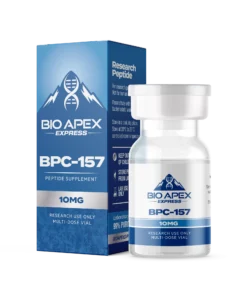
BPC-157 is the benchmark compound for researchers studying peptides for healing tendons. Derived from a protein found in human gastric juice, BPC-157 is studied for its ability to accelerate the healing of torn muscles, damaged tendons, and injured ligaments by promoting angiogenesis and upregulating growth hormone receptors in the damaged tissue.
TB-500 (Thymosin Beta-4) works synergistically with BPC-157 by upregulating actin — a cellular building block essential for cell migration, proliferation, and tissue repair. The BPC-157 + TB-500 Wolverine Stack is the most popular combination for researchers studying comprehensive musculoskeletal recovery protocols.
Peptides for Healing Joints and Bone Health
Research into joint cartilage degradation and bone density frequently utilizes peptides that influence the skeletal matrix at a systemic level.
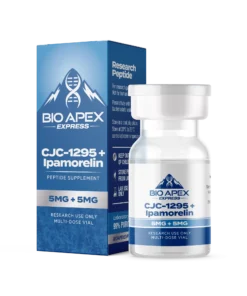
CJC-1295 + Ipamorelin is a Growth Hormone Secretagogue (GHS) blend studied for its systemic anabolic effects. By stimulating the natural release of HGH and subsequently IGF-1, this combination supports increased bone mineral density and enhanced cartilage repair — making it a key compound for researchers investigating peptides for healing joints and degenerative joint conditions.
Peptides for Skin Health and Broad-Spectrum Tissue Repair
The extracellular matrix of the skin shares structural similarities with connective tissue throughout the body. Peptides studied for skin health frequently demonstrate broader tissue repair implications.
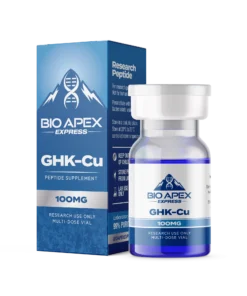
GHK-Cu (Copper Peptide) is a naturally occurring complex studied for its ability to stimulate collagen and elastin production, promote angiogenesis, and exert anti-inflammatory and antioxidant effects. It is one of the most versatile compounds for studying both dermal regeneration and deeper connective tissue remodeling.
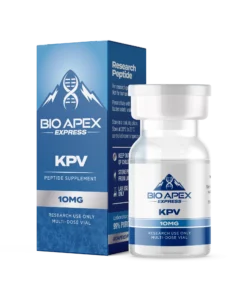
KPV is a naturally occurring anti-inflammatory tripeptide (Lysine-Proline-Valine) researched for its ability to modulate immune response and reduce tissue inflammation — a critical component of the repair process across all tissue types.
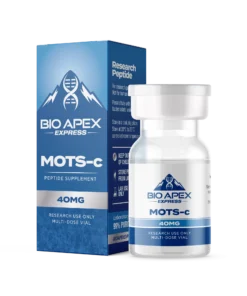
MOTS-c is a mitochondrial-derived peptide studied for its role in metabolic homeostasis. By optimizing cellular energy output, it is researched for its potential to support the high energy demands of systemic tissue repair and regeneration.
Why Purity Matters in Healing Peptide Research
The regenerative effects observed in peptide research are entirely dependent on molecular precision. An impure or degraded compound does not just produce inaccurate data — it can produce actively misleading results.
Every compound in the Bio Apex Express healing peptide catalog is:
- Third-party HPLC and Mass Spectrometry tested to confirm sequence integrity and purity
- Guaranteed to 99.5%+ purity — the industry benchmark for research-grade compounds
- Publicly verified with Certificates of Analysis available for every active batch
All products sold by Bio Apex Express are intended for laboratory and research use only. They are not for human consumption, diagnostic, therapeutic, or agricultural use. Purchasers must be qualified professionals familiar with the handling and storage requirements of research peptides.