
Interest in peptide research has grown rapidly over the past several years, with scientists exploring naturally occurring peptides for their potential roles in tissue repair, skin health, and regenerative medicine. Among the most widely studied is GHK-Cu peptide, a naturally occurring copper-binding peptide that has been investigated for its effects on wound healing, collagen production, inflammation, and hair biology.
Although GHK-Cu has gained popularity in skincare and wellness discussions, much of the online information combines established research with claims that have yet to be confirmed in human clinical trials. This article examines what GHK-Cu peptide is, how it works, and what the current scientific evidence suggests.
What Is GHK-Cu Peptide?
GHK-Cu (Glycyl-L-Histidyl-L-Lysine Copper) is a naturally occurring tripeptide composed of three amino acids:
- Glycine
- Histidine
- Lysine
When this peptide binds with a copper ion (Cu²⁺), it forms the copper peptide complex known as GHK-Cu.
Researchers first identified GHK in human plasma in the 1970s, where it was found to naturally decline with age. Since then, scientists have investigated its role in cellular repair, wound healing, and tissue regeneration.
Unlike many synthetic peptides currently being researched, GHK-Cu occurs naturally in the human body and can also be found in saliva and urine.
How Does GHK-Cu Work?
GHK-Cu functions primarily as a cell signaling peptide.
Rather than acting as a hormone, it appears to influence how cells respond during tissue repair and regeneration.
Laboratory studies suggest GHK-Cu may help regulate genes involved in:
- Collagen production
- Elastin synthesis
- Tissue remodeling
- Inflammatory responses
- Antioxidant activity
- Cellular repair
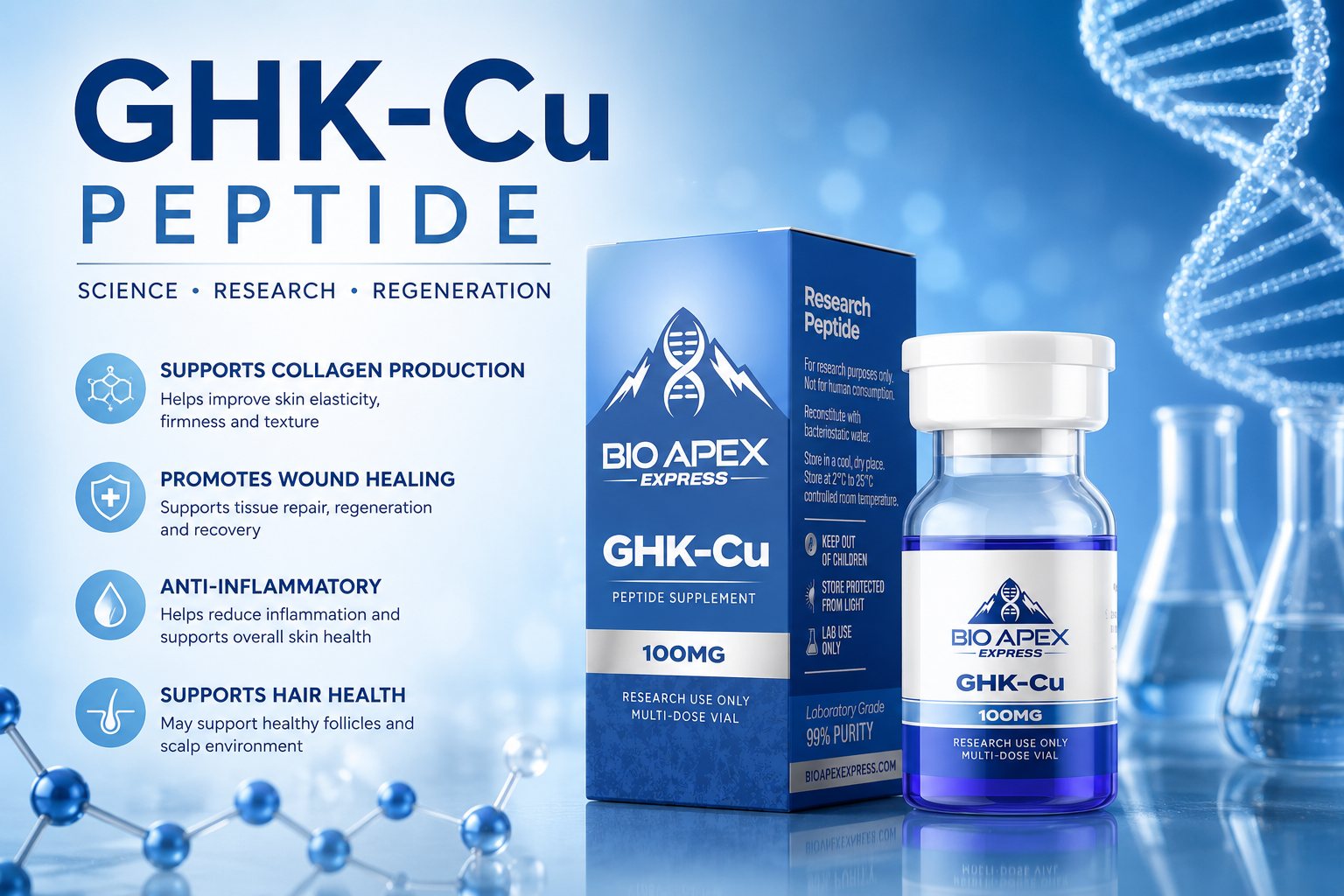
Researchers believe these signaling effects contribute to its potential role in skin health and wound healing.
It is important to note that much of this mechanistic research comes from laboratory and animal studies, with human evidence varying depending on the condition being studied.
GHK-Cu and Skin Health
One of the best-studied applications of GHK-Cu involves skin rejuvenation.
As skin ages, collagen production naturally declines, contributing to:
- Fine lines
- Wrinkles
- Reduced elasticity
- Thinner skin
- Slower wound healing
Several laboratory and clinical studies suggest GHK-Cu may stimulate fibroblasts—the cells responsible for producing collagen and elastin.
Researchers have observed potential improvements in:
- Skin firmness
- Elasticity
- Texture
- Overall appearance of photoaged skin
Some cosmetic formulations containing copper peptides have demonstrated modest improvements in visible signs of aging when compared with placebo creams, although results vary among studies.
GHK-Cu and Wound Healing
One of the earliest areas of GHK-Cu research focused on wound repair.
Scientists have investigated whether the peptide may support healing by:
- Encouraging collagen deposition
- Supporting blood vessel formation (angiogenesis)
- Reducing excessive inflammation
- Promoting tissue remodeling
Animal and laboratory studies have produced encouraging findings, while human research remains more limited.
Researchers continue exploring its potential role in chronic wound management and tissue regeneration.
Can GHK-Cu Support Hair Growth?
Hair restoration has become another area of interest.
Laboratory research suggests GHK-Cu may influence hair follicle biology through several mechanisms, including:
- Supporting dermal papilla cell function
- Reducing inflammation around hair follicles
- Promoting blood vessel development
- Supporting extracellular matrix remodeling
While several cosmetic products contain copper peptides for scalp care, current human evidence remains limited, and larger controlled clinical trials are needed to determine effectiveness for hair loss.
Anti-Inflammatory and Antioxidant Research
Inflammation and oxidative stress contribute to numerous age-related conditions.
Experimental studies suggest GHK-Cu may help regulate inflammatory signaling molecules while supporting antioxidant defense systems.
Researchers have proposed that these actions may contribute to tissue repair following injury.
However, many of these findings come from laboratory models rather than large human clinical trials.
Emerging Areas of Research
Scientists continue investigating GHK-Cu in several fields of regenerative medicine.
Current research includes:
Skin Aging
Researchers continue studying its potential role in improving signs of intrinsic and photoaging.
Tissue Regeneration
Experimental models have investigated whether GHK-Cu influences connective tissue repair and regeneration.
Nerve Repair
Preclinical studies are exploring whether GHK-Cu may support nerve regeneration following injury.
Lung Health
Some laboratory research has examined whether GHK-Cu may influence tissue repair in models of pulmonary injury.
Most of these applications remain investigational and require additional human clinical research.
What Does the Current Evidence Say?
The strongest evidence supporting GHK-Cu currently relates to:
- Skin appearance
- Cosmetic anti-aging applications
- Wound healing research
While laboratory findings are promising, many broader health claims—including systemic anti-aging, longevity, or widespread regenerative effects—remain speculative.
Large, high-quality human clinical trials are still needed before definitive conclusions can be made.
Safety Considerations
GHK-Cu has generally demonstrated a favorable safety profile in topical cosmetic products.
Reported side effects are uncommon but may include:
- Mild skin irritation
- Temporary redness
- Sensitivity at the application site
Research involving injectable forms remains much more limited than topical formulations, and long-term safety data are still being established.
As with many peptide therapies, safety may vary depending on formulation, route of administration, and individual health factors.
GHK-Cu Peptide in Canada
For readers researching GHK-Cu peptide Canada, it’s important to understand the regulatory landscape.
While GHK-Cu is commonly found in cosmetic skincare products, GHK-Cu peptide is not currently authorized in Canada as a prescription therapeutic peptide. Cosmetic products containing copper peptides may be available if they comply with Canadian cosmetic regulations, but therapeutic claims require supporting evidence and regulatory authorization.
Consumers should distinguish between cosmetic products intended to improve the appearance of the skin and therapeutic products intended to diagnose, treat, or prevent disease.
Common Misconceptions
“GHK-Cu reverses aging.”
Current research suggests GHK-Cu may improve certain visible signs of skin aging, but there is no evidence that it reverses biological aging.
“GHK-Cu regrows hair.”
Laboratory studies are promising, but current human evidence is insufficient to conclude that GHK-Cu consistently restores hair growth.
“It’s proven for regeneration.”
Researchers continue investigating regenerative applications, but many remain in the experimental stage.
“Because it’s natural, it’s automatically safe.”
Although GHK-Cu naturally occurs in the body, safety depends on formulation, dosage, route of administration, and individual health factors. “Natural” does not necessarily mean risk-free.
Future Directions
GHK-Cu continues to be an active area of scientific research. Future studies will help clarify:
- Long-term safety
- Optimal dosing strategies
- Clinical effectiveness for wound healing
- Potential applications in regenerative medicine
- Hair growth outcomes in larger human trials
As more high-quality clinical evidence becomes available, researchers will gain a clearer understanding of where GHK-Cu fits within modern medicine and dermatology.
Final Thoughts
GHK-Cu peptide is one of the most extensively researched copper peptides, with decades of scientific investigation supporting its biological role in tissue repair, collagen production, and cellular signaling. Its naturally occurring presence in the human body and encouraging laboratory findings have made it an important subject in dermatology and regenerative medicine research.
However, while evidence supports its potential in areas such as skin health and wound healing, many broader claims regarding anti-aging, hair restoration, and systemic regenerative effects remain under investigation. As with many emerging peptide therapies, current knowledge continues to evolve, and well-designed human clinical trials remain essential for determining both the benefits and limitations of GHK-Cu peptide.
